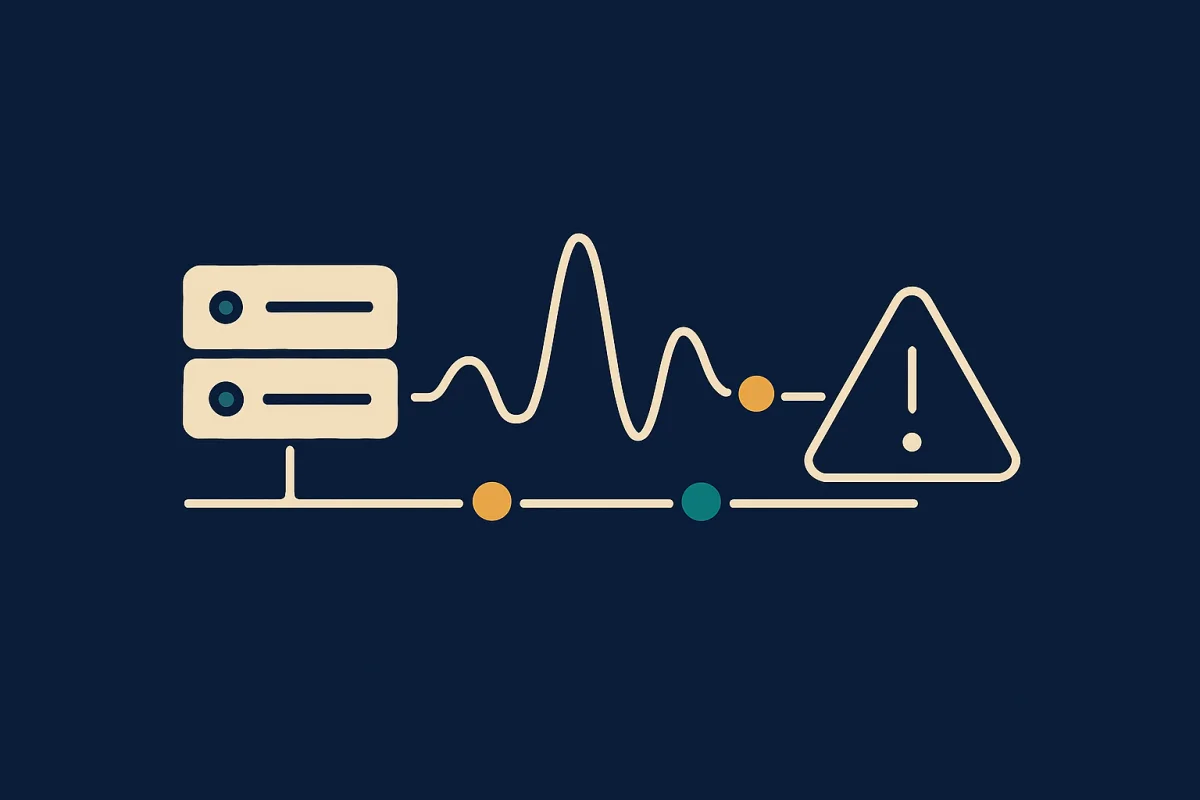
Every autumn, the same pattern repeats. Low-pressure systems sweep across Northern Europe, power grids come under strain, and here and there, data centers and network hubs lose power or their upstream connectivity. For anyone responsible for client sites, that means one thing: a site that was up at three o'clock can be gone at four — without a single line of code changing.
The problem isn't just that the outage happens. The real problem is determining what actually happened before you act, alert a client, or spend hours troubleshooting in the wrong direction.
Why weather causes downtime that has nothing to do with your site
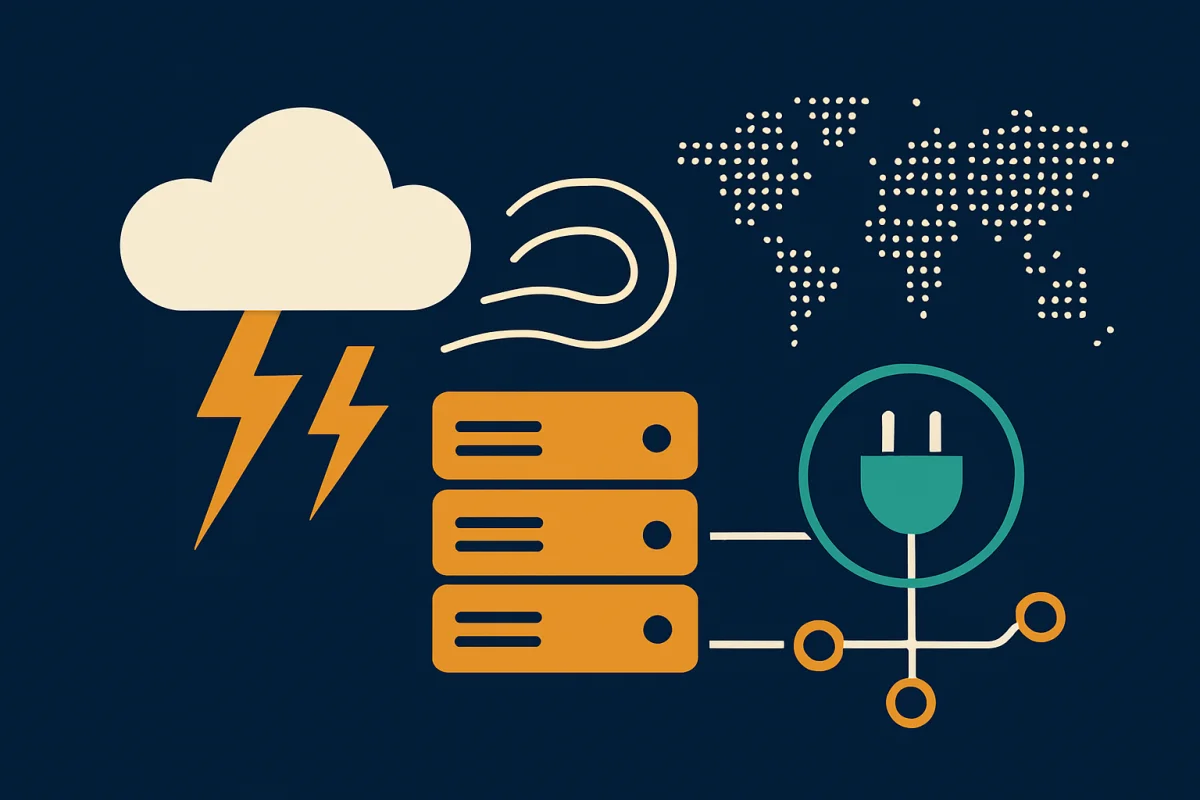
A weather-related outage at a hosting provider rarely happens where you can see it directly. It typically involves:
- Power loss at a data center or shared server facility, often confined to a single region or provider.
- Damaged fiber infrastructure that disrupts routing between carriers, affecting some network paths but not others.
- Overloaded backup power systems when an outage lasts longer than the UPS batteries were sized to handle.
- DNS and peering issues that arise when traffic has to be rerouted through alternative network paths.
What all these scenarios have in common is that they're outside your control and your client's — yet they still show up as "site is down" in your monitoring, if that monitoring is simple enough to misread the situation.
The classic mistake: a single check point
If you only have one monitoring node, say in Frankfurt, and that node's upstream provider is hit by a local network fault during a storm, you'll see a false "down" — even though the site works perfectly for visitors in Stockholm, Amsterdam, or London. The reverse is also true: a genuine weather-related outage at your client's hosting provider might not show up at all if the checking node happens to sit in the same region and share the same infrastructure problem, or if it's far enough away that the routing issue never touches that path.
The result is either a false alarm in the middle of the night for a problem that never affected a single visitor, or worse: silence while the site is actually unreachable for a large part of the world.
Why confirmation from a second country matters
This is exactly the kind of situation where a single failed check should never trigger an alert on its own. At Ravnsight, every failed check is confirmed from a second location in a different country before any alert goes out. The logic is simple but powerful:
- A node in country A sees that the site isn't responding.
- Before an alert is sent, the same site is immediately checked from a node in country B.
- If the site responds normally from country B, the problem is likely local — a network fault along the path to node A, not an actual outage on the site.
- If the site also fails to respond from country B, confidence rises to a real, confirmed disruption — and the alert goes out with the correct severity.
This kind of cross-validation is especially valuable during autumn storms, because weather-related network disruptions are almost always geographically limited. A power outage in one region of Germany won't automatically affect a node located in Ireland or Finland, and that difference is exactly what separates a genuine outage from a local network hiccup.
What you should demand from your monitoring before storm season
Ahead of autumn, it's worth reviewing how your current monitoring actually works, not just what it promises:
- Multiple independent check nodes in different countries, not just different cities on the same network.
- Automatic second-country confirmation before any alert reaches you or your client.
- A clear timeline showing exactly when the first failed check occurred, when confirmation came in, and from which locations.
- A clear separation between "down," "slow," and "warning" so that a borderline case isn't automatically read as a total outage.
What to do once a weather outage is confirmed
Once an outage is confirmed from two countries, you know the problem is real. The next step is figuring out whether it sits with the hosting provider, the DNS chain, or elsewhere in the infrastructure. Ravnsight observes and correlates these signals clearly on the timeline, but it never fixes anything automatically. It's still you, or the hosting provider, who decides on and carries out the fix — with solid information in hand instead of guesswork under pressure.
Weather-related outages can't be prevented. But knowing for certain that an outage is real, and knowing it fast without false alarms, is entirely achievable with the right monitoring setup.